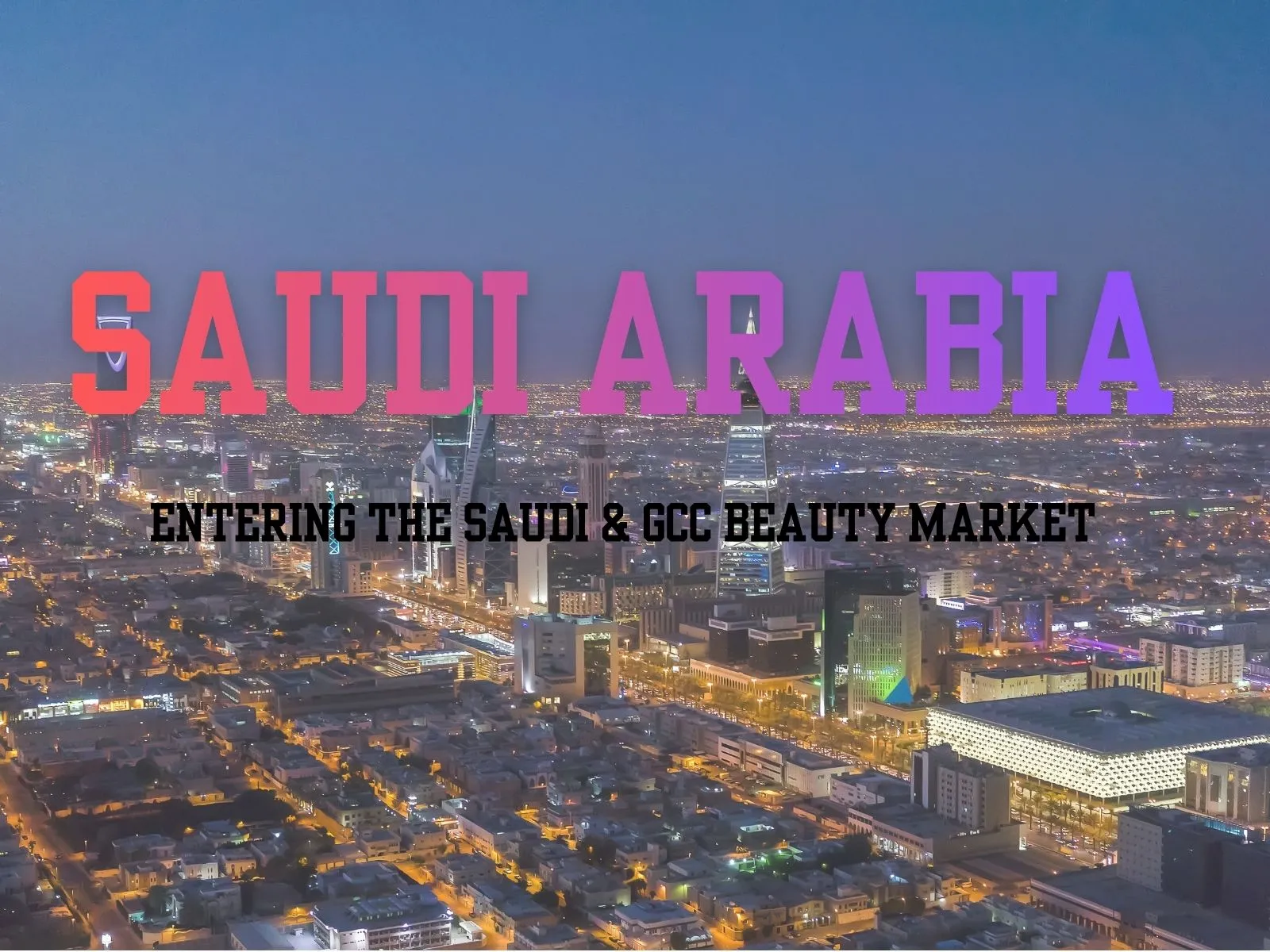
The Gulf is where beauty margin lives. Saudi Arabia alone is the largest market in the GCC, and Vision 2030 has unlocked retail, tourism, and a young female workforce with spending power. If your line fits halal and prestige, this region rewards it.
The catch is the same as everywhere with real regulation: you don’t get on the shelf without clearing the authority. In Saudi, that’s SFDA.

SFDA: the gatekeeper
SFDA — the Saudi Food and Drug Authority — handles cosmetic product registration through its FASEH platform. Every product needs to be registered before it’s placed on the Saudi market. For a foreign brand, that means:
- A local agent or authorized representative to submit on your behalf.
- Product information filed in FASEH — composition, labeling, and safety documentation.
- Arabic labeling, alongside English, on the final pack.
SFDA works off GCC-wide harmonized standards (GSO), so getting Saudi right often smooths the path into the wider GCC — UAE, Qatar, Kuwait, Oman, Bahrain. One region, one regulatory logic.
Halal is the expectation
The GCC is a Muslim market, and Halal is effectively a requirement at retail even where it isn’t a hard legal line for every product. Major retailers and distributors ask for it, and consumers read the label for it. A Halal-certified production line removes that friction entirely — which is why our factory carries Halal certification at the plant level.
Arabic-language search is where Gulf buyers start: مستحضرات التجميل الحلال (halal cosmetics), مصنع مستحضرات التجميل (cosmetics factory), مورد كوزميتيك OEM. If your presence is English-only, you’re invisible to the distributors who’d actually place the order.

What sells in the Gulf
- Fragrance and oud. Scent is central — oud and amber families lead.
- Prestige and gifting. Higher price points work; presentation matters.
- Skincare and halal everything. Halal-certified skincare and makeup both.
- Hijab-friendly and modest beauty. Long-wear, transfer-resistant formats do well.
The lower-risk entry path
Same logic as Indonesia: run compliance and product development in parallel, and start from compliant base formulations rather than reinventing. Our OEM vs ODM guide helps you pick the model, and the certifications overview explains SFDA, Halal, and the rest in plain terms.
MOQ is 500 units per SKU, sampling about 30 days, and production lead time roughly 30 days after sign-off.

FAQ
Ready to enter the GCC?
Don’t let SFDA paperwork be the thing that delays your launch by a season. Talk to us about SFDA-ready, Halal-certified OEM/ODM formulations built for the Gulf.
Contact Terry — WhatsApp +86 159 7551 1702 · terrychan@tiarabeautymfg.com · Request a quote