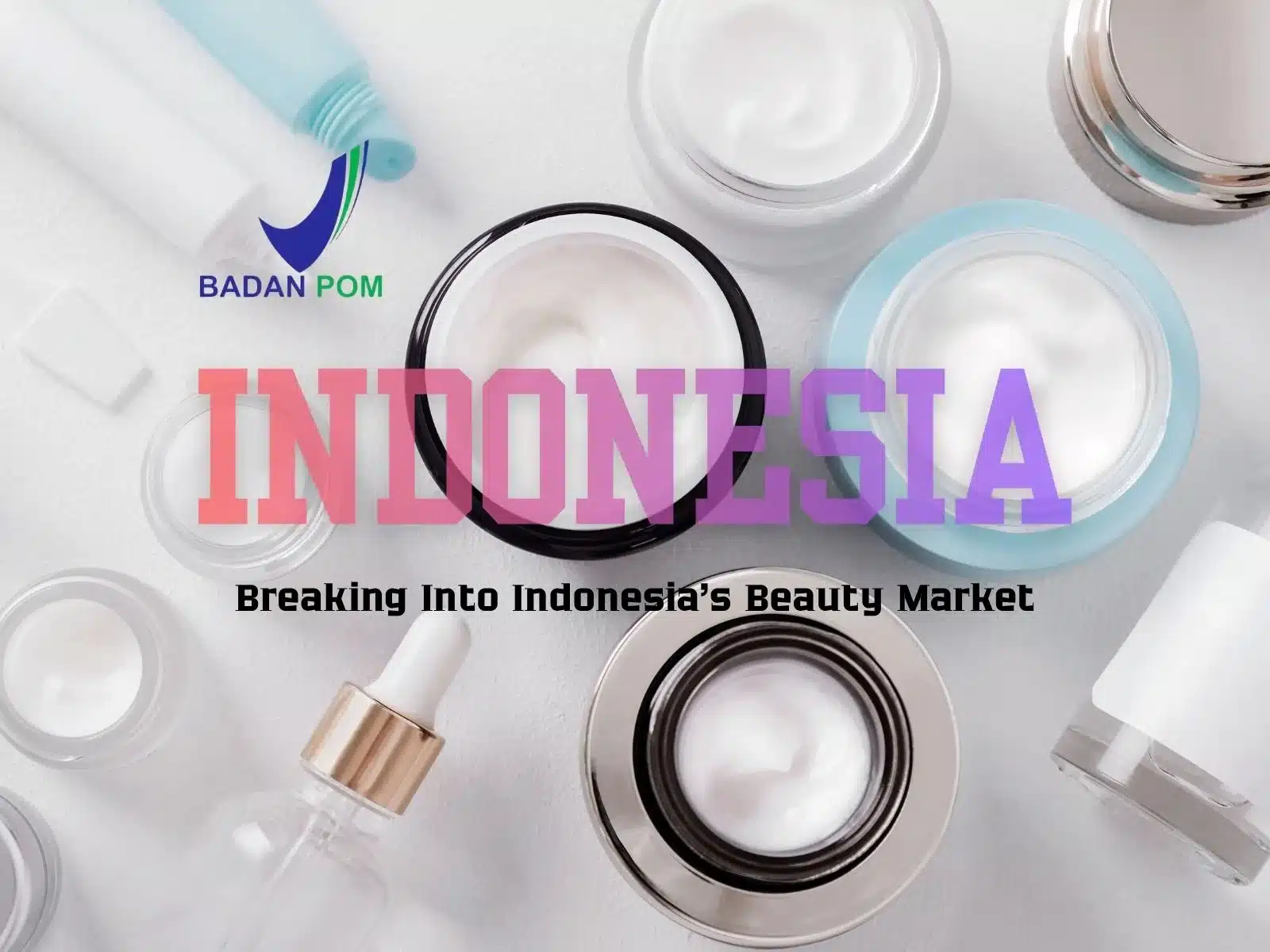
Indonesia is the prize most beauty brands underestimate. 270 million people, the world’s largest Muslim population, and a skincare-obsessed middle class that’s growing fast. If you’re building a halal or private label line for Southeast Asia, this is the market you want in.
But “want in” and “get in” are different things. Indonesia has two gates every cosmetic product has to pass before it touches a shelf: BPOM registration and Halal certification. Miss either one and your shipment sits at the port.
This guide walks through both, plus the local trends that decide whether a product actually sells once it’s legal.
BPOM: Indonesia’s version of the FDA
BPOM — Badan Pengawas Obat dan Makanan — is the agency that clears cosmetics for sale. Every product needs a notification (notifikasi) before it can be imported or manufactured locally. No notification, no legal sale.
For a foreign brand, the practical path is:
- Appoint a local representative or importer of record (you can’t self-register from overseas).
- Submit the formula, labeling, and safety data through the BPOM online system.
- Pass review — notification typically takes one to three months, faster when the documentation is clean.
One thing that helps a lot: work with a manufacturer who already speaks BPOM’s language. If your factory’s formulations are documented to a recognized GMP standard (we run GMPC and ISO 22716), the notification package goes together faster and with fewer back-and-forths.
Halal is not optional
Indonesia is phasing Halal certification in as mandatory for cosmetics, with full enforcement expected through 2026. For a Muslim-majority market, this isn’t a nice-to-have — retailers and consumers expect it, and the law is catching up to that reality.
The certificate comes through LPPOM MUI (or the newer BPJPH system). The good news: a Halal-certified factory handles most of the heavy lifting, because the certification covers your production line, not just a single product. That’s why we invested in Halal certification at the plant level — so any line you private label with us is Halal by default.
If you’re searching in Bahasa, the terms buyers and partners actually use are kosmetik halal, pabrik kosmetik halal, and produsen kosmetik OEM Indonesia. Ranking for those local-language queries is how Indonesian distributors find you — English-only pages barely surface here.

What Indonesian buyers actually want
A few patterns repeat across the market:
- Skincare first. Indonesia is a skincare market more than a color market. Serums, moisturizers, sunscreen, and gentle cleansers move fastest.
- Halal and “natural” sit together. Claims like herbal, halal, and mild carry real weight.
- Price tiers matter. A strong mass-premium tier exists, but hyper-luxury is narrow. Most volume is attainable pricing.
- Tropical formulation. Humidity and heat mean lightweight, non-comedogenic, long-wear formats win over heavy creams.
How to enter without burning a year
The brands that move fastest treat compliance and product development as parallel tracks, not sequential ones. While BPOM notification runs, you’re finalizing formulas, packaging, and local labeling — not waiting.
For most new entrants, private label or OEM is the lower-risk route: you start from proven, already-compliant formulations instead of inventing one from scratch and re-certifying everything. Our private label guide breaks down the step-by-step, and our certifications overview covers what each certificate actually means.
MOQ starts at 500 units per SKU, sampling runs about 30 days, and lead time to first production is roughly 30 days after approval — tight enough to test the market without a warehouse of inventory you can’t move.

FAQ
Ready to enter Indonesia?
If Indonesia is on your roadmap, the most expensive mistake is starting compliance late. Talk to us about BPOM-ready, Halal-certified formulations and a private label line built for Southeast Asia.
Contact Terry — WhatsApp +86 159 7551 1702 · terrychan@tiarabeautymfg.com · Request a quote